How to write prompts for an AI picture book: less is more
If you have used ChatGPT or Midjourney, you have learned to pack everything into one long prompt: the room, the light, the clothes, the layout. In CreateBooksAI that habit works against you. A page needs one plain sentence about what happens. Here is why, and how to write it.
Why long prompts made sense in ChatGPT and Midjourney
An image tool without memory starts from nothing on every picture. So the prompt has to carry everything, every time.
A book is different. The same kitchen and the same girl come back on many pages. If every page describes the room again, in slightly different words, the AI draws a slightly different room every time: the window moves, the table changes side, a shelf disappears.
The room and the characters are already made
In CreateBooksAI you make each place and each character once. They go along with every page as reference pictures.
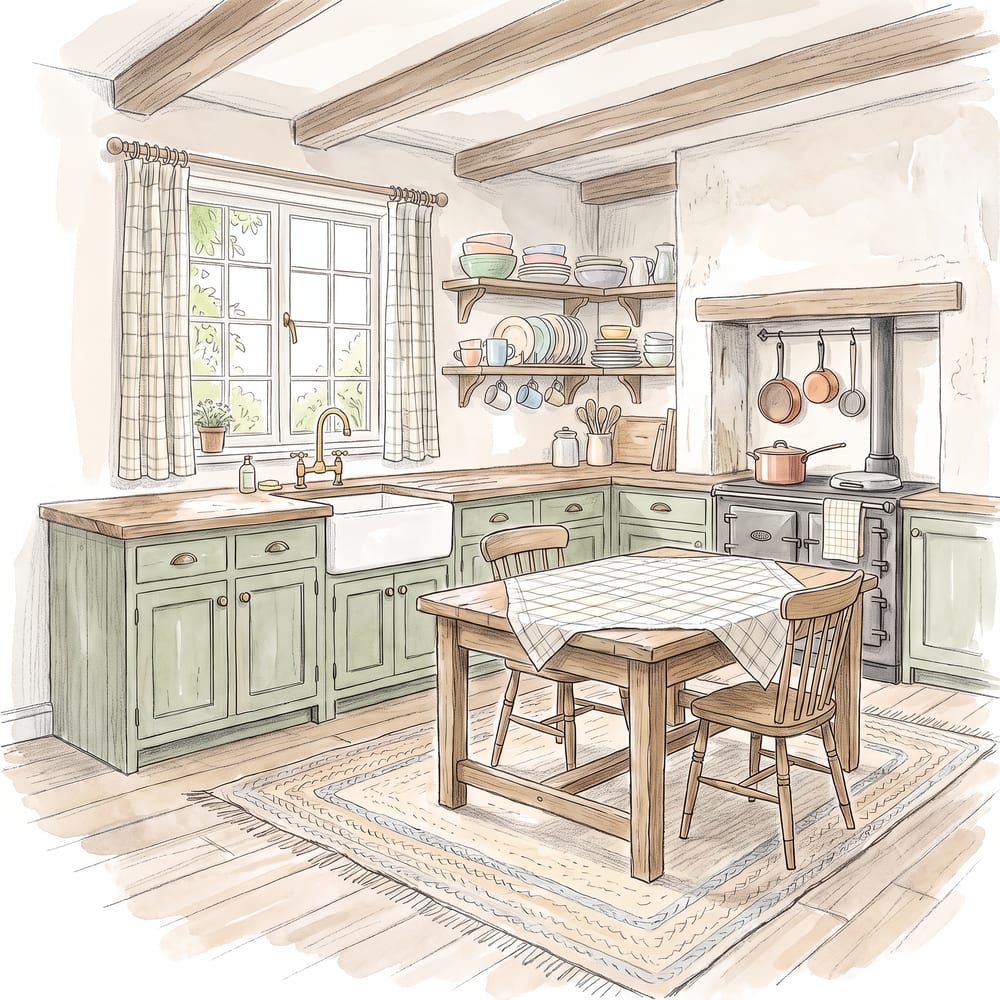
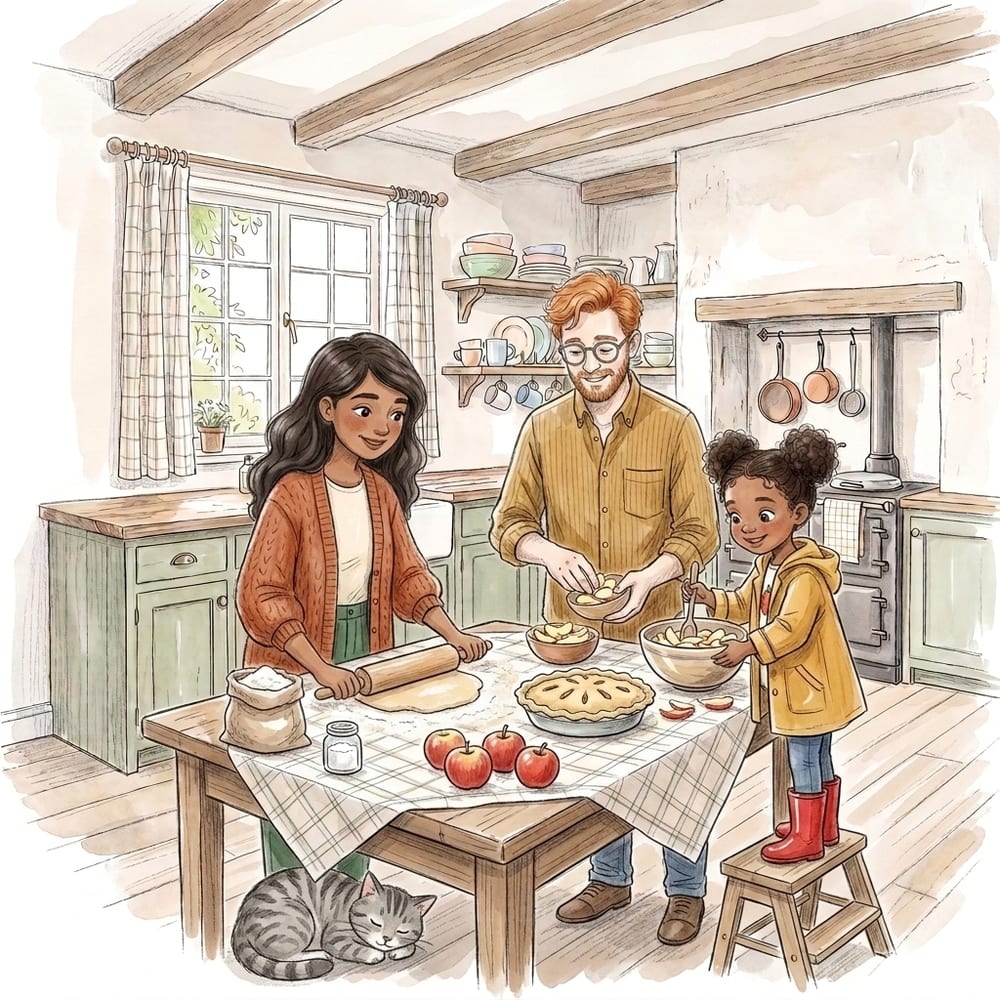
Left: the place, made once. Right: a page in it, from one sentence.
- The place shows the room: walls, furniture, the window, the light.
- The characters show how everyone looks and what they wear.
- The page only says what happens: who does what, and how they feel.
The page on the right was made from this sentence, and nothing else:
The same page, said simply
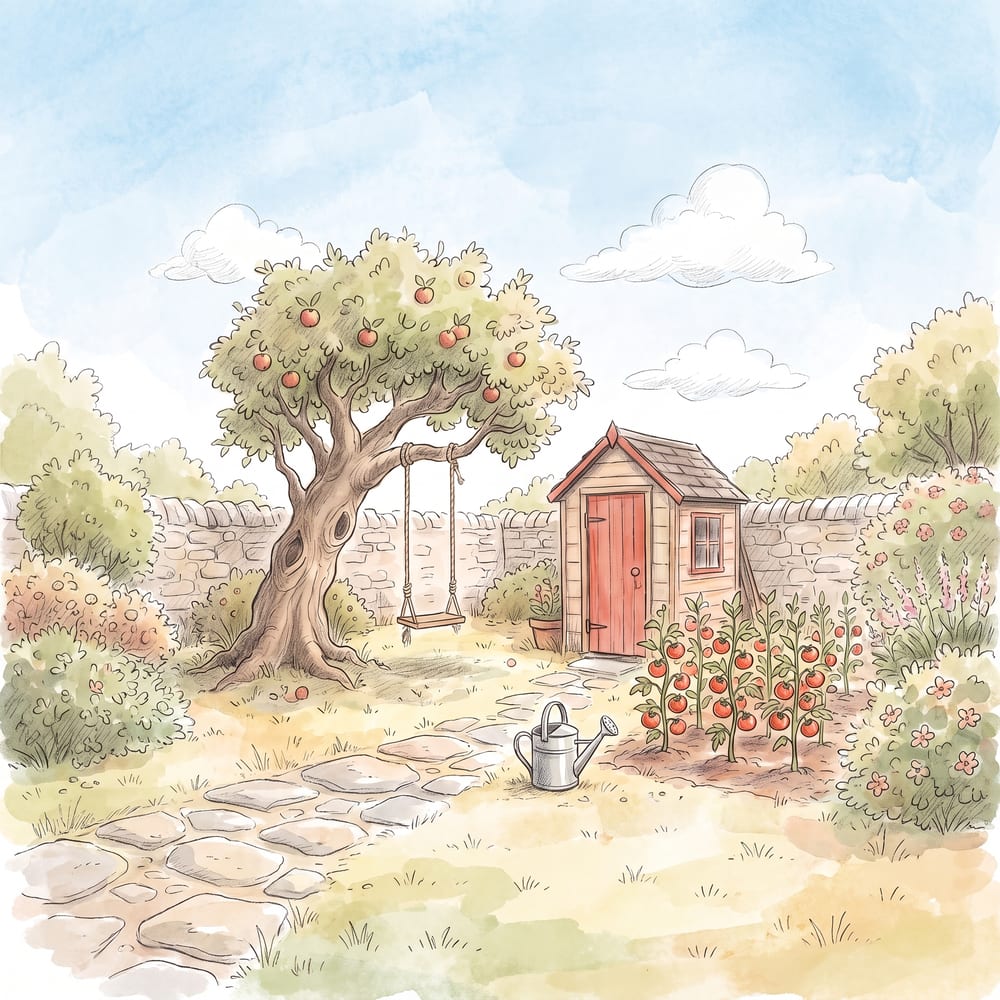
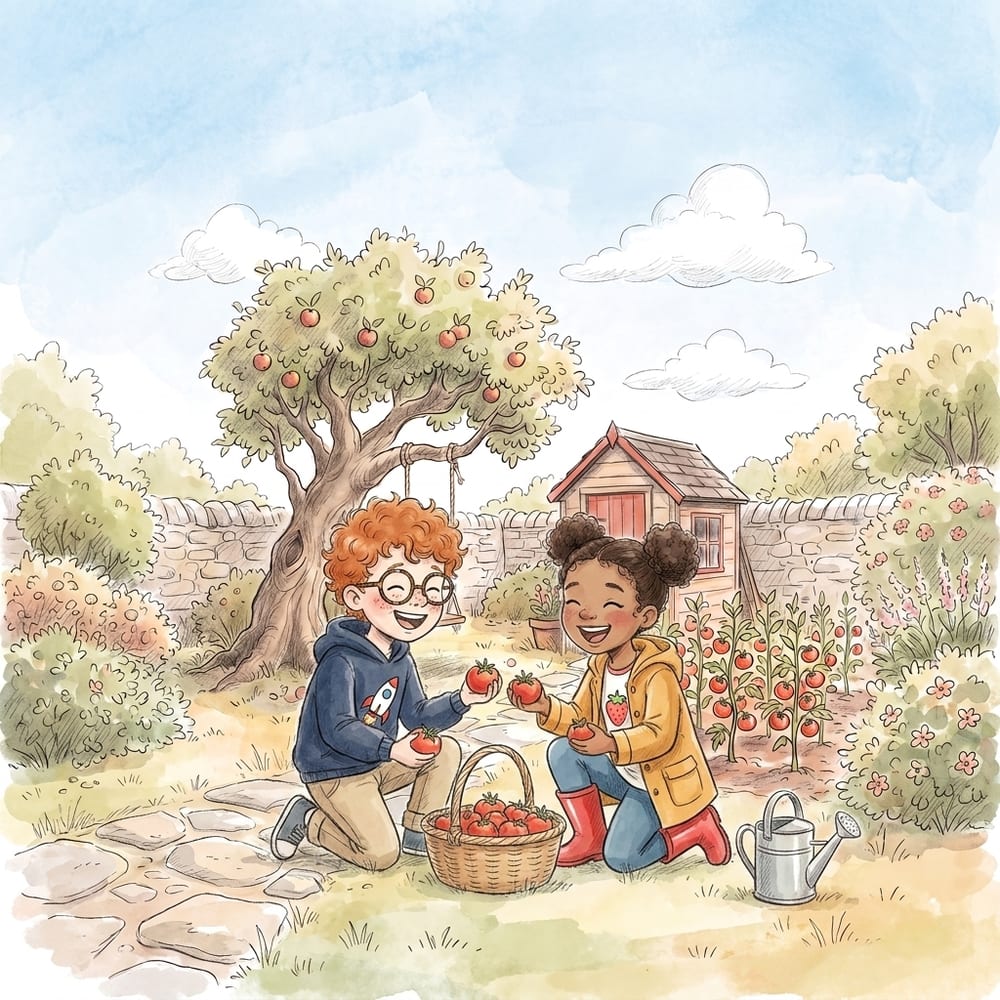
“Nora and Finn kneel by the tomato plants, picking ripe tomatoes into a basket and laughing.”
Five rules for a good page description
- Say who does what. “Nora waters the tomato plants while Milo watches from the wall.”
- Add how they feel. Happy, sleepy, surprised, laughing. Feelings change the faces and the poses.
- Say where in the place, in a few words. “At the window”, “in bed”, “by the swing”. Not the whole room.
- New clothes are an outfit, not a sentence. Pyjamas or a costume go under the character as a new outfit, so they stay the same on every page.
- Leave the layout to us. No “large in the picture” or “space for text top left”. We compose every page and you place the text where you want it.
Write in any language. If a page description still repeats the room, CreateBooksAI suggests a shorter one before anything is painted, so no credit is spent on it. See a whole book with every sentence on the inside a real book page.
Frequently asked
Do I need to learn prompt engineering to make a picture book with AI?
No. In CreateBooksAI you describe each character and place once in plain words, and each page in one or two sentences about what happens. Style tags, quality words and camera settings are not needed.
Why does the room change between pages?
Usually because each page description describes the room again in different words, and the AI follows the text over the reference picture. Make the room once as a place and leave it out of the page descriptions.
How do I change a character's clothes on one page?
Make a new outfit for the character (for example pyjamas) and pick that outfit on the page. Clothes written into a page description change from page to page.
Can I write page descriptions in German, Danish or another language?
Yes. Write in the language you think in. The suggestions keep your language.
What does it cost?
A character or a place costs 1 credit once, and each page costs 1 credit. Single Spark is $14.99 for 50 credits, the Creator Pack $24.99 for 100 credits and the Publisher Pack $89.99 for 400 credits, about $0.22 to $0.30 per image. There is no subscription.
- How to keep the same character on every page of an AI picture book
- How to turn a photo of your child into a picture book character
- How to make a children's book for Amazon KDP with AI
- Make a personalized bedtime story book starring your child
- Picture book illustration styles: watercolor, sketch, 3D and more
- How to print your own picture book with Amazon KDP
- How to sell your picture book or coloring book on Amazon KDP